A29 · Reference edition 2026.11
Retention and loading order — Recording and revision
Retention holds a part against established references. Applying retention before seating can create a different final orientation.
Scope and purpose
A reference record should allow another reader to reconstruct the intended description. Keep the identifier, context and revision together. When information changes, explain the change and retain enough of the earlier description to understand what was superseded.
Working notes
This reference collection concerns light, offline dimensional-inspection layouts. It brings locating concepts, component descriptions and revision records together without substituting for an engineered fixture design. The drawings are original explanatory diagrams. Reference IDs identify documents, not commercially tested products. Read the scope and limitations alongside each example, and keep the actual part drawing and inspection requirements available when reviewing a proposed layout.
Practical example
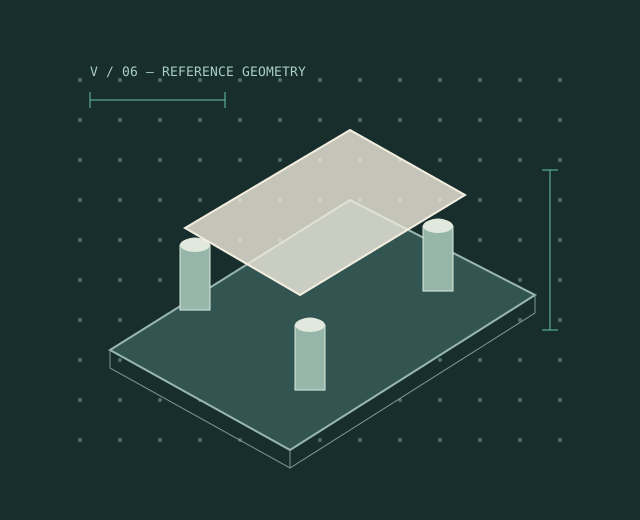
Number the seating, contact confirmation, retention and removal steps on the same figure.
| Reference record | Interpretation |
|---|---|
| A29 | Retention and loading order |
| Scope and purpose | Retention holds a part against established references. Applying retention before seating can create a different final orientation. |
| Limits and interpretation | Illustrations do not establish clamp forces or safe operating limits. |
Review checklist
Check the identifier; describe the observation and its source; date the revision; link affected figures; distinguish confirmed facts from open questions.