A28 · Reference edition 2026.11
Retention and loading order — Comparison and alternatives
Retention holds a part against established references. Applying retention before seating can create a different final orientation.
Scope and purpose
Compare alternatives using the same question and context. A difference in wording, layout or scale is not automatically a difference in performance. Keep the original observations available and explain which differences are meaningful for this comparison.
Working notes
This reference collection concerns light, offline dimensional-inspection layouts. It brings locating concepts, component descriptions and revision records together without substituting for an engineered fixture design. The drawings are original explanatory diagrams. Reference IDs identify documents, not commercially tested products. Read the scope and limitations alongside each example, and keep the actual part drawing and inspection requirements available when reviewing a proposed layout.
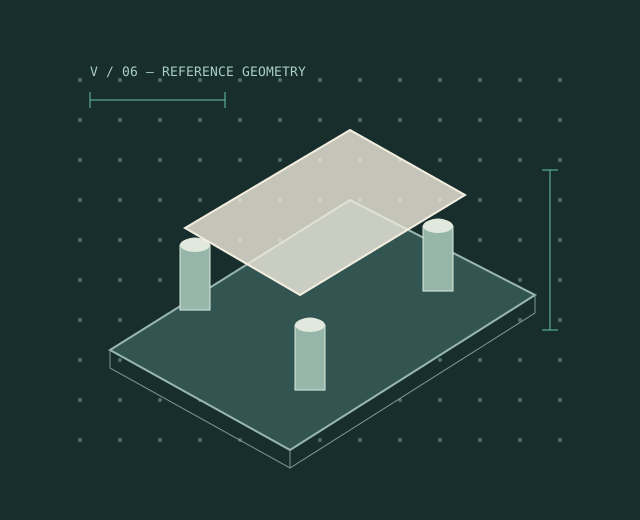
Practical example
Number the seating, contact confirmation, retention and removal steps on the same figure.
| Reference record | Interpretation |
|---|---|
| A28 | Retention and loading order |
| Scope and purpose | Retention holds a part against established references. Applying retention before seating can create a different final orientation. |
| Limits and interpretation | Illustrations do not establish clamp forces or safe operating limits. |
Review checklist
State the comparison question; align context and labels; list common features separately from differences; leave unsupported conclusions open.