A27 · Reference edition 2026.11
Retention and loading order — Layout and sequence
Retention holds a part against established references. Applying retention before seating can create a different final orientation.
Scope and purpose
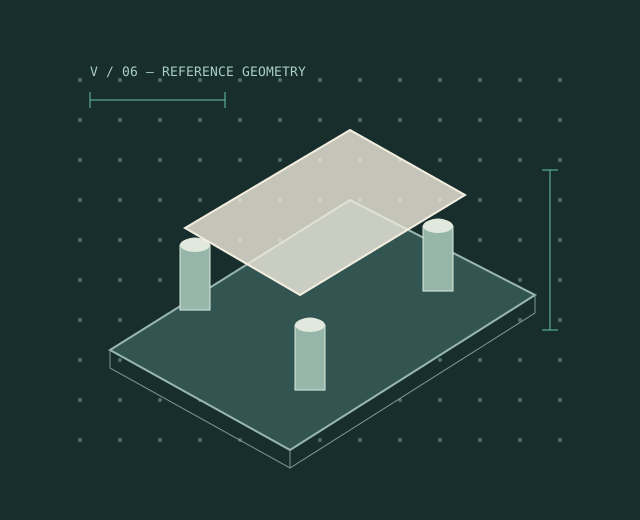
Place the relevant elements in a visible order before completing the record. A diagram should distinguish position from sequence and should preserve the orientation used in the written notes. Review the example for a practical way to make the relationship explicit.
Working notes
This reference collection concerns light, offline dimensional-inspection layouts. It brings locating concepts, component descriptions and revision records together without substituting for an engineered fixture design. The drawings are original explanatory diagrams. Reference IDs identify documents, not commercially tested products. Read the scope and limitations alongside each example, and keep the actual part drawing and inspection requirements available when reviewing a proposed layout.
Practical example
Number the seating, contact confirmation, retention and removal steps on the same figure.
| Reference record | Interpretation |
|---|---|
| A27 | Retention and loading order |
| Scope and purpose | Retention holds a part against established references. Applying retention before seating can create a different final orientation. |
| Limits and interpretation | Illustrations do not establish clamp forces or safe operating limits. |
Review checklist
Identify the starting condition; mark the order or orientation; check that labels in the figure match the accompanying table.